Industry 4.0 & Mixed Reality
How could Mixed Reality revolutionize Industry 4.0.

The Industry 4.0 or the Fourth Industrial Revolution is the current transformation of traditional manufacturing and industrial practices with the latest smart technologies. This primarily focuses on the use of large-scale machine to machine communication (M2M) and Internet of Things (IoT) deployments to provide increased automation, improved communication and self-monitoring, as well as smart machines that can analyse and diagnose issues without the need for human intervention.
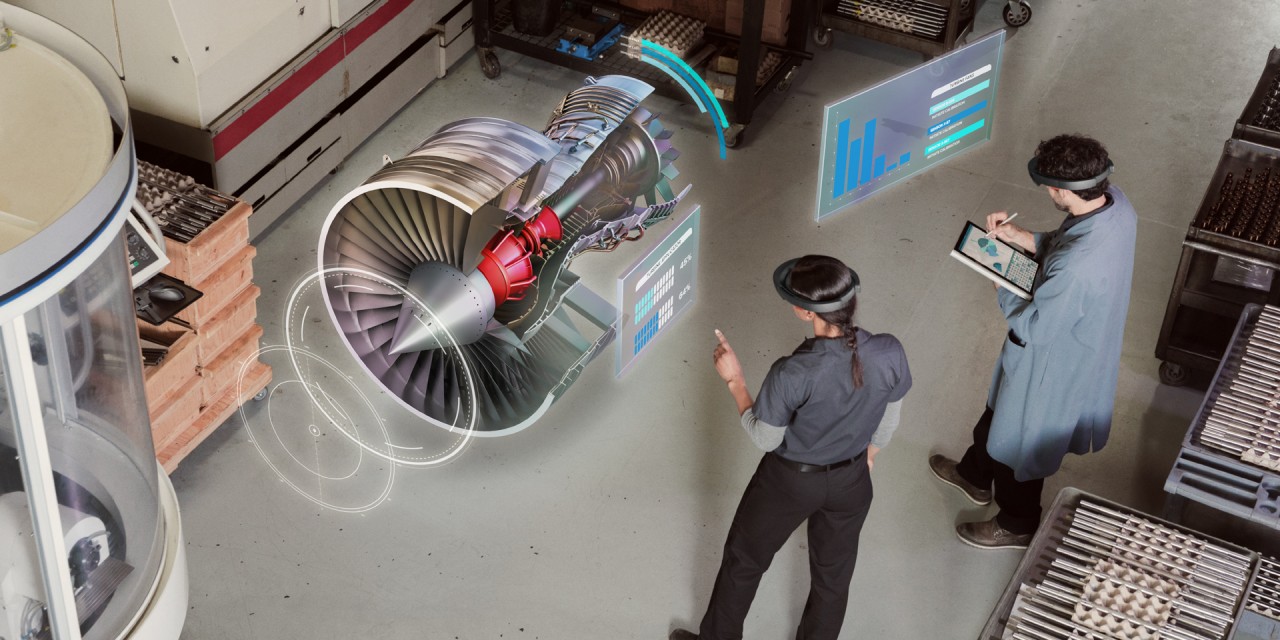
Like Augmented Reality, Mixed Reality is an overlay of digital content in to the real world. But, the fact that content appears in form of hologram is what makes it even more exciting to the eye and the Industry 4.0, along with a plethora of other features.
But what can Mixed Reality contribute to the Industry 4.0?
1. Speed up the Quality Control process
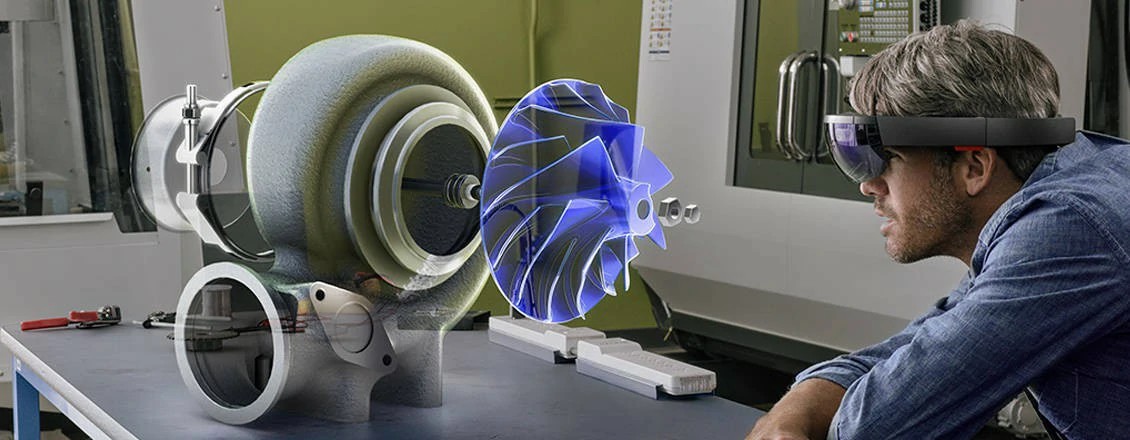
Leveraging the use of overlaid information is also gaining supporters in Quality Control, using both HMDs and handheld IoT devices. Aerospace is one such sector where Quality Assurance is of huge importance, but the time and costs of processes can be huge. Adding text, icons, images, 3D models, and animations to real-world production lines means faster assembly – with fewer mistakes. For example, since adopting mixed reality in their production environments, Airbus has reported a reduction in time required to inspect A380 fuselage brackets, from three weeks to just three days.
2. Minimize skilled labour shortage
It is estimated that there will be almost 3.5 million manufacturing jobs available over the next decade as ‘Baby Boomers’ exit the workforce. Already dealing with pressure to fill current open positions, how can manufacturers use mixed reality to help with future resourcing? The speed at which new staff can be trained is one key factor. In addition, any valuable skills lost by retiring workers can be retained in a mixed reality-led environment by using remote support via HMDs. And when it comes to attracting the right talent, by integrating new technologies familiar to a younger demographic, manufacturers can experience a smoother on-boarding journey.
3. Improve employee training
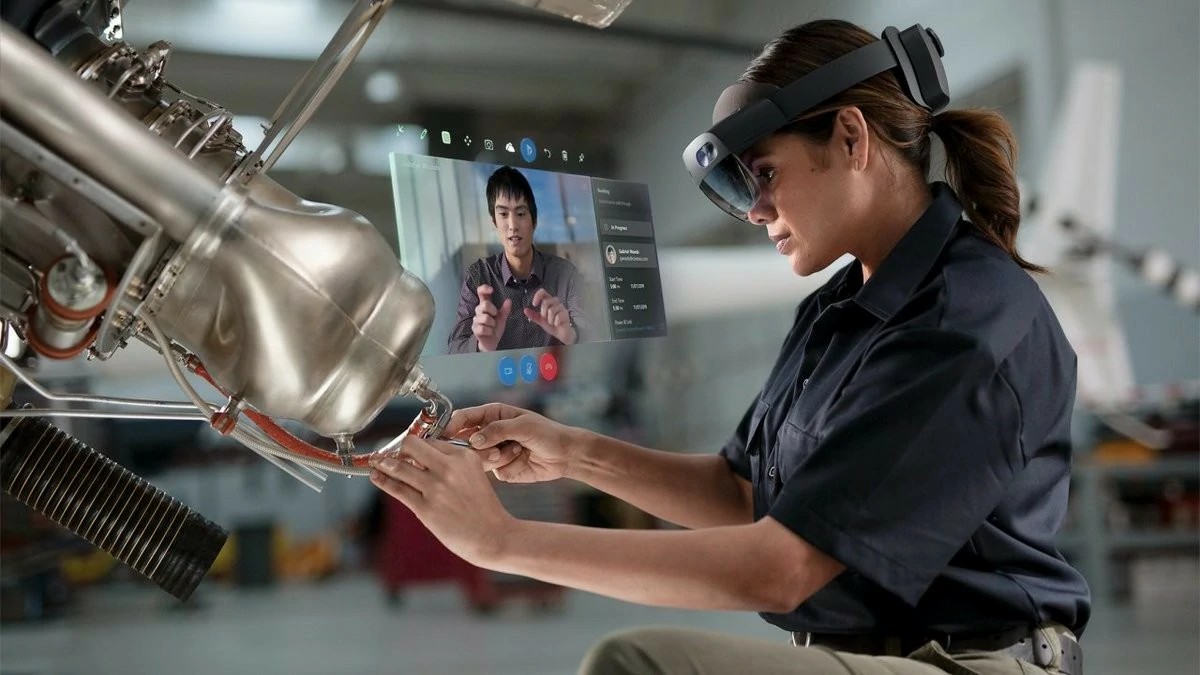
Whether class-based or following study guides in the form of books and online courses, training sessions can now be enhanced or even replaced using mixed reality. Users can be guided step-by-step through modules, with training information overlaid onto real-world parts and assemblies in front of them; reducing the time needed to improve worker’s skill sets. There may also be less need to remove staff from the production line, since training can take place on-the-job. BAE Systems have introduced this concept on one of their production lines, for electric propulsion systems. Not only have they witnessed a more efficient training output, they have cut time taken to create the training modules as well as cost; which is now a tenth of what it was.
4. Stay competitive
Combining the benefits of mixed reality with the analytics-driven power of IoT can leverage significant improvements. The potential opportunities are huge; and with the industry predicted to grow to US$108bn by 2021, new innovations will be emerging rapidly. Together, these technologies are set to contribute greatly towards the Industry 4.0 movement; capturing and contextualizing data, and automating manufacturing processes to optimize efficiency and reduce waste.
5. Reduce call out times for maintenance
Organizations that used to rely on engineers, working with heavy and often outdated manuals, are now using mixed reality to dramatically cut call out times. One such company is elevator manufacturer ThyssenKrupp. Engineers equipped with HMDs not only get the most up-to-date information, they also view this hands-free; greatly reducing the time needed to knowledge-check. And that’s not all – when engineers place a call to a support line, the remote expert has a ‘you see what I see’ view, allowing them to provide guidance as if they were physically present on the customer site.
By adopting the right technology such as Mixed Reality, at the right time, businesses will thrive as the Industry 4.0 gathers pace.
Disclaimer : The views and opinions expressed in the article belong solely to the author, and not necessarily to the author's employer, organisation, committee or other group or individual.